
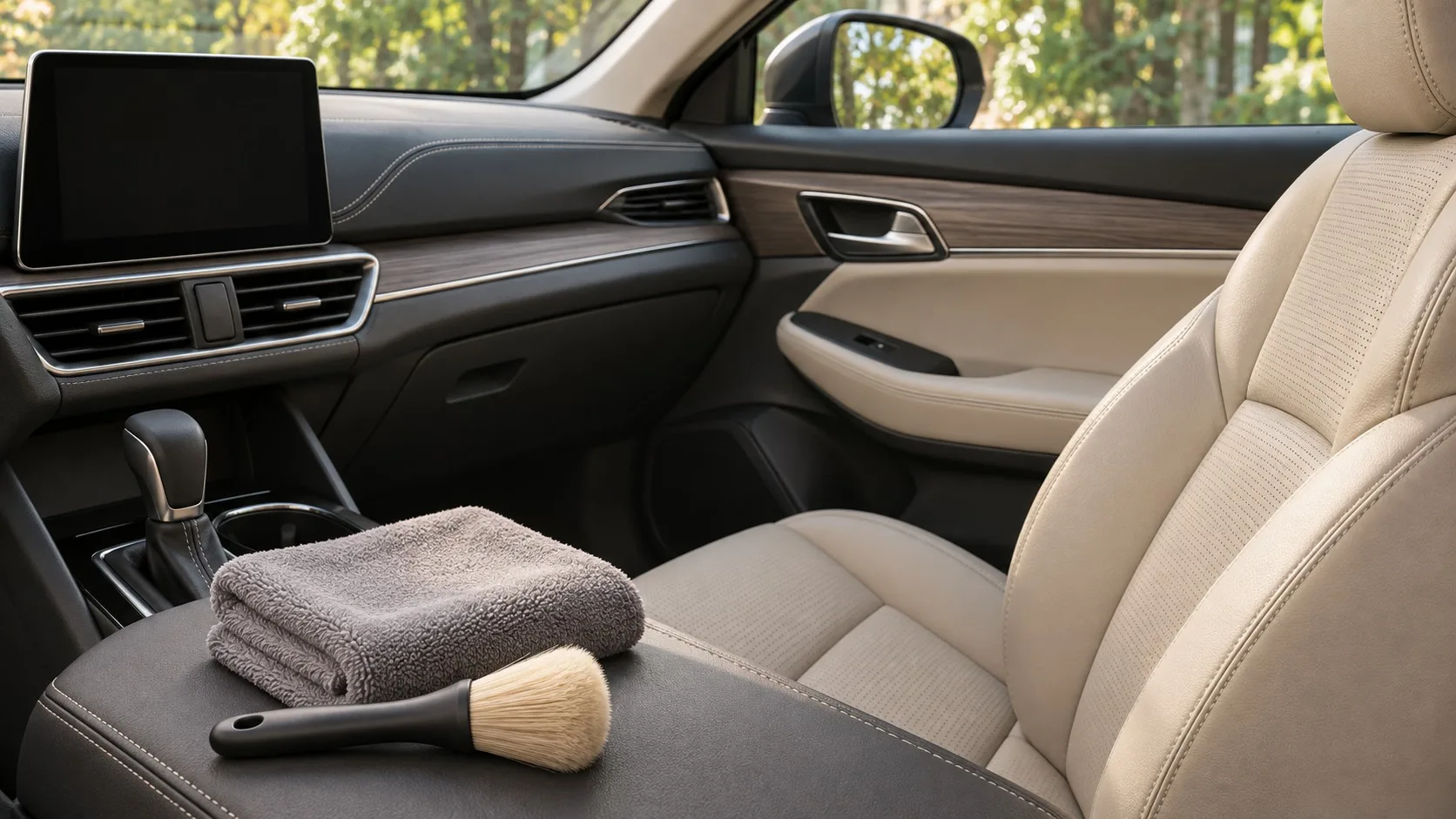
Start with surfaces, not the package name
Before handing your car to a detailing centre, note its model, year and seat material, and identify the stains and surfaces you want addressed. Ask which product and method will be used on each surface. If the material is uncertain, request a check against your vehicle’s manual. This is a service-selection guide, not a universal cleaning recipe.
A screen is not ordinary glass
Tesla’s guidance calls for a soft, lint-free cloth on its touchscreen and advises against cleaners or wet wipes. Ask whether the centre uses separate screen-cleaning tools and whether your car has a screen-cleaning mode. These are manufacturer examples, not instructions for every model. Source: Tesla interior cleaning tips.
Ask specifically about seats and belts
The 2022 Ford F-150 manual warns against chemical solvents and strong detergents on seats with side airbags. Tesla also advises keeping water and cleaner out of seat-belt mechanisms. Ask how these areas will be protected; fragrance or shine does not establish a product’s suitability. Source: Ford, cleaning seats and the headliner.
A message you can send the centre
“My car is [model and year], with [seat material, if known]. I need [areas] treated. Which products will you use on the seats and screen? How will you protect seat belts and airbag areas? Which stains might remain?” Fill these placeholders with your own vehicle details; they do not describe a business.
At collection
Review the agreed areas with the centre and record the work completed and any remaining stains. If a warning or seat-belt problem appears, seek qualified inspection rather than trying to hide it through cleaning. Your model- and market-specific owner’s manual takes priority. Do not assume that guidance for a US-market vehicle applies unchanged to your vehicle in Saudi Arabia.
Explore car washing and care on 2uto. Sources checked on 14 November 2026.
Sources & references
Use the owner’s manual for your exact model and year; symbols and instructions can differ.