In this article
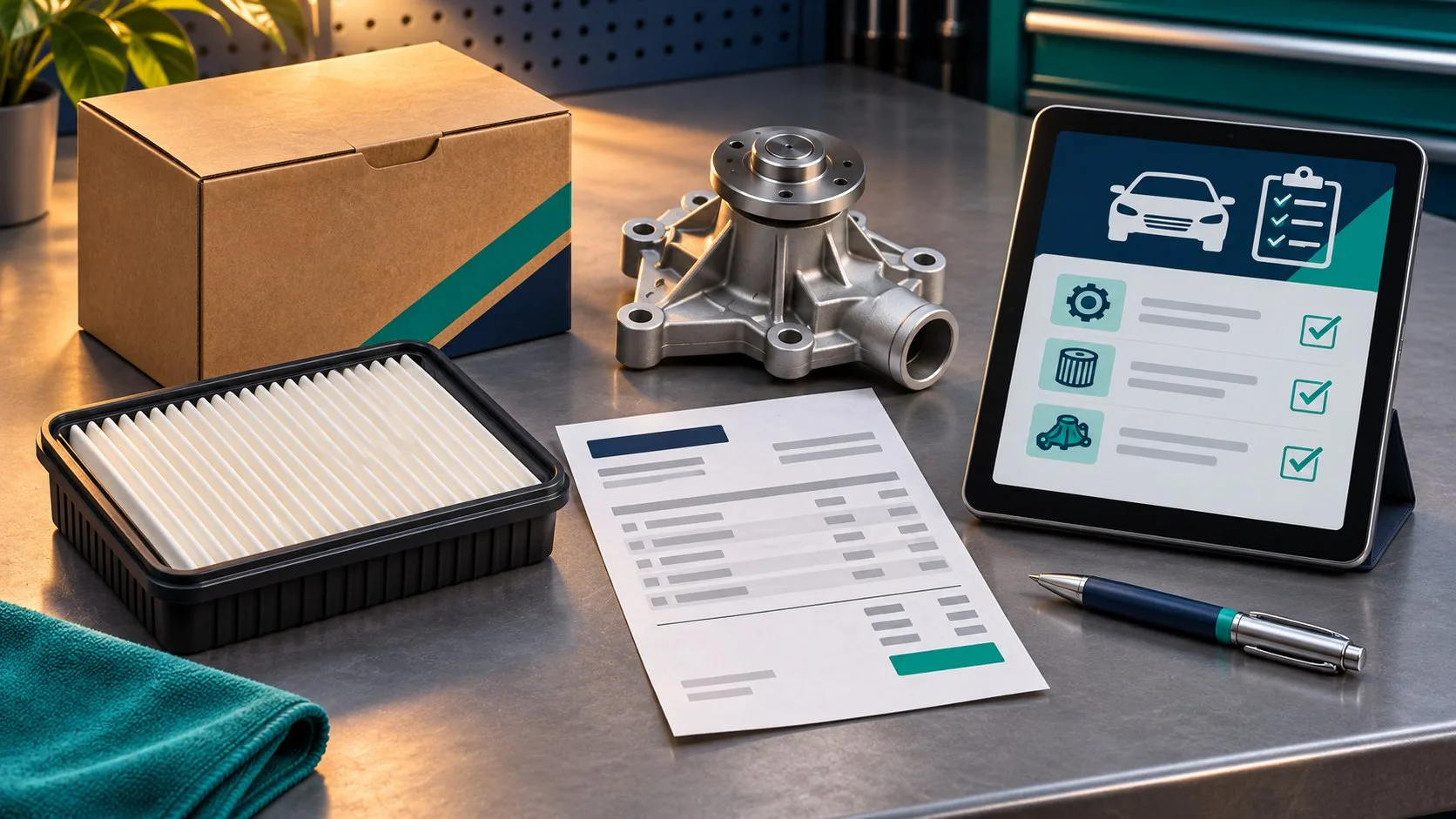
When a question arises after buying a spare part, remembering the shop and amount paid may not be enough. You need to identify the item received, the vehicle it was ordered for, whether installation or delivery was included, and the document linking these details to the transaction. The invoice starts that record; it does not replace fitment confirmation or inspection. This is a practical filing guide, not a complete legal checklist for invoicing.
Separate quotations, orders and invoices
Keep each document for its actual purpose. A quotation records a proposal at a particular time, an order confirmation records the request, an invoice describes the transaction issued by the seller, and payment evidence helps trace the amount. Do not rename a shopping-cart screenshot as an invoice or assume a payment notification explains the part specification. Connect documents using a common order reference and retain any message changing an agreed item.
Ask a precise question when details differ
If a description or quantity changes between the quotation and invoice, ask about the specific line before leaving the store or starting installation. “Is this an approved replacement number for the part I ordered?” is more useful than “Is it correct?” Keep the answer, its date and the reference used by the seller. Never edit the seller’s invoice yourself to make a mismatch disappear.
Make the part identifiable
A general label such as “filter” offers little help after several purchases. Ask for a distinguishing description, part number, brand and quantity where available. If the shop’s stock code differs from the manufacturer’s number, retain both and label them correctly. Bosch’s official Part Finder describes number searches, OE cross-references and replacement numbers as different functions. Similar-looking codes should not be treated as interchangeable without confirmation.
Link the invoice to fitment evidence
Retain the relevant seller confirmation, such as a catalogue check or correspondence identifying the vehicle version, engine and intended part. A number printed on an invoice does not automatically establish fitment for every vehicle sharing a model name. A packaging photograph alone is not proof of authenticity or compatibility either. For uncertainty involving a safety-related component, obtain qualified confirmation before installation.
Review the price by line, not only by total
In your notes, distinguish parts, labour, delivery and discounts. Check the currency, whether tax is shown, and the quantity behind the amount. Do not invent charges or assume a workshop payment includes a component bought elsewhere. Where a deposit and balance were paid separately, keep the references linking them without counting the same payment twice.
ZATCA’s e-invoicing guide describes basic QR information including seller identity, VAT number, date, total and tax. Compare the displayed information with the invoice using official verification methods where applicable. Reading a code does not establish that the part fits your vehicle or is good quality. This organisational record is not a tax-compliance audit.
Record receipt before discarding the packaging
Take clear photographs of the packaging label, number and received item while keeping invoices and personal details out of public posts. Check the count, packaging condition and obvious differences from the order. For a partial shipment, record what arrived, what remains and the seller’s follow-up reference. Retain packaging until the return terms and item condition are clear. Avoid breaking seals or beginning installation before resolving a doubt that might change your decision.
Add installation details without changing purchase records
When the item is installed, record the service provider, work date, odometer reading and workshop invoice reference if available. This distinguishes purchase date from first use. If it has not been installed, say so rather than inventing a date or mileage. Keep your notes separately so that the seller’s document remains as issued.
Keep follow-up terms together
Ask for the warranty and return terms applying to that item, who handles a problem, which documents are needed and any installation-related conditions. Do not assume a universal duration or transfer one retailer’s policy to another. Save the terms supplied at purchase with their date, distinguishing general promotional statements from a specific written commitment.
A filing system you will actually use
- Use one folder per vehicle and a dated subfolder for each purchase, including its order reference.
- Keep the original invoice, payment evidence, fitment confirmation and receipt photographs.
- Add a short note identifying the item, quantity, installation status and any open question.
- Maintain a readable backup and redact personal details before sharing externally.
Before closing the file, try finding it by part number and then by seller. If you can locate the right record and understand what was bought and what remains unresolved without relying on memory, it is doing its job. The aim is not more paperwork: it is less confusion between purchase, installation and fitment, and faster follow-up when needed.
Sources and scope
References reviewed on 15 November 2026. ZATCA explains invoice information; Bosch illustrates part-number and cross-reference functions, not Saudi stock availability. The filing and review workflow is independent practical guidance.
Sources & references
Explore the details and read the information at its source.