In this article
A car can look dramatically different after a wash or polish, but shine alone does not explain what changed. A simple record made before handover gives you and the detailer a shared starting point: an existing scratch, a stain that needs testing, or an area you do not want treated. The aim is not to photograph every centimetre or assume poor service. It is to make expectations and comparisons clear.
What should you record before handover?
Create one folder named for the car and visit date. Keep original photographs, the service request and your notes together. Walk around the car with the person receiving it and ask for important observations to be included in the work order rather than left in conversation.
Start wide, then photograph details
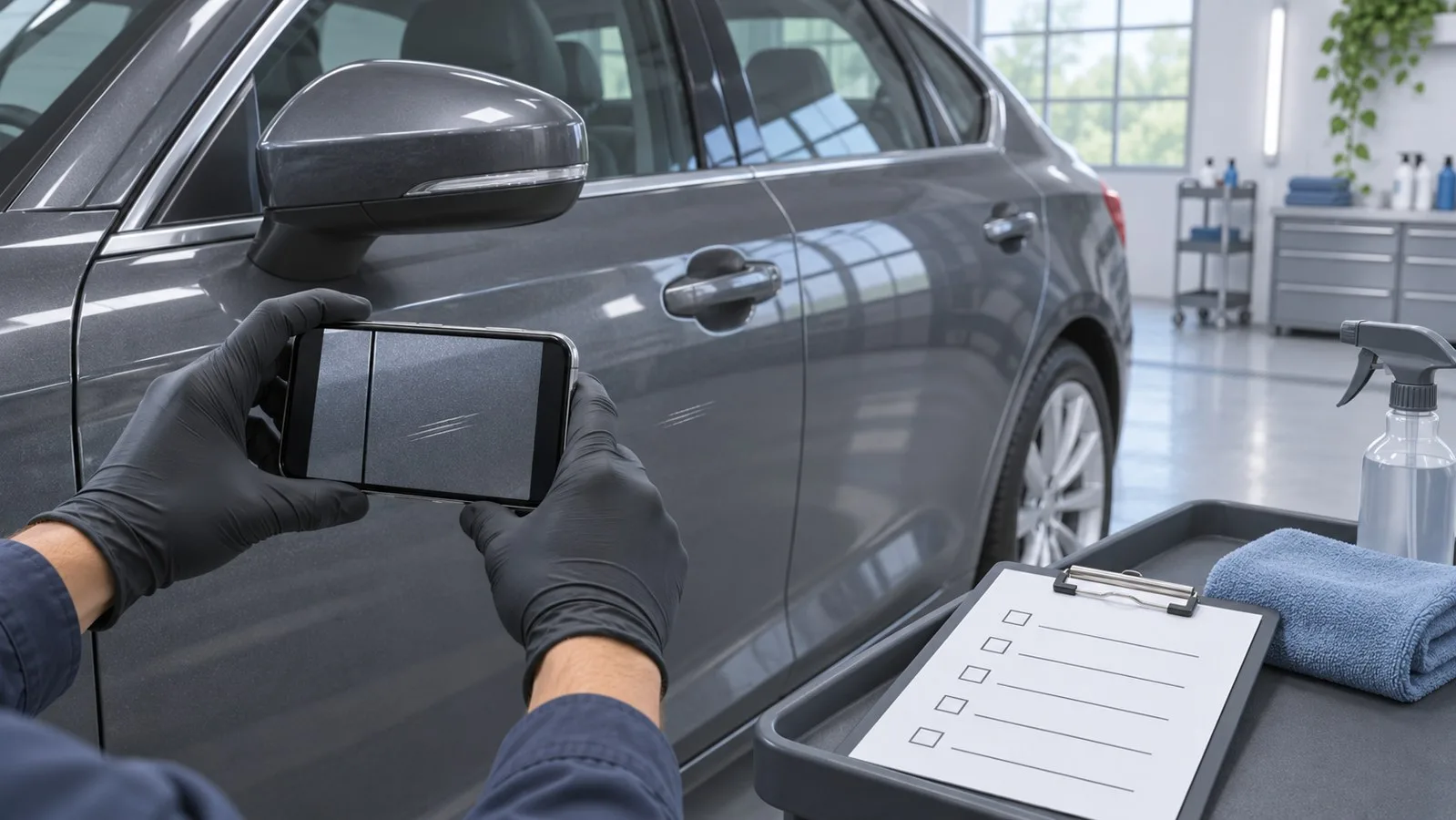
Photograph all four sides and the roof where it is safely accessible. Then record scratches, dents, door edges, bumpers and wheels. For each mark, take a wider photograph showing its location and a close-up showing the detail. Avoid beauty filters. Keep the original even if you send an annotated copy. Do not unnecessarily include other customers or registration plates.
Record the cabin and remove personal items
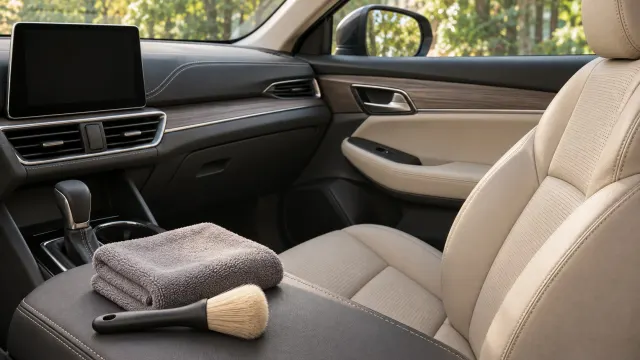
Note stains, tears, peeling, and surfaces that are already shiny or faded. Record accessories that will remain, such as floor mats or a child seat, and agree whether removing them is part of the job. Take valuables and personal paperwork with you; a handover photograph should not expose private information. If a warning message is already displayed, record its wording without guessing its cause.
Separate observations from diagnoses
Describe what you can see. “A line of approximately this length on the right rear door” is more accurate than “deep paint damage” when no specialist has assessed it. An old seat stain is not automatically removable. If dirt or lighting prevents a clear assessment, mark the area as not yet assessed and request another inspection after initial cleaning, before additional treatment.
Number the notes and photographs rather than exchanging dozens of unexplained images: 01 for the door, 02 for the wheel, and so on. Do not rub dry dust away with your hand simply to reveal a mark for a photograph. Let the centre prepare the surface appropriately first.
Understand the service you are approving
A wash is not a cure for every paint defect
Distinguish cleaning, appearance enhancement, paint correction and protection. Autoglym provides a useful product-specific example: it describes Paint Reviver as filling fine scratches and swirls, while distinguishing a different product that removes defects from the clear coat. That does not define every package called a polish. Ask what result is expected and what limitations remain, rather than relying on a package name.
Check material and surface restrictions
Tell the centre about known repainting, matte finishes, wraps, protection films and previous repairs. Check both vehicle and product instructions. For example, the Tesla Model Y manual warns about cleaners that can damage exterior components and specifies testing interior cleaners in a concealed area. Do not apply one model's instructions to every car, or assume a paint product is suitable for leather or a screen.
A compact handover record
- Car and appointment: vehicle identification, handover date and time, and contact method.
- Initial condition: numbered observations and photographs, including areas not yet assessed.
- Scope: agreed work and excluded areas.
- Expectations: what will be attempted, what needs testing, and any documented limitations.
- Price and timing: agreed cost, whether VAT is included, and expected collection time.
- Extra work: contact you before work or costs beyond the agreement.
An illustrative note could read: “Stain on left rear seat, photo 04. Begin with a suitable product test in a concealed area. Contact the customer before broader treatment or additional cost.” This is an adaptable working example, not a legal form or a promise that the stain will disappear.
Compare the result when collecting the car
Inspect in adequate light and compare the same locations with your earlier photographs where practical. Start with the agreed work, then follow the numbered observations. Ask what remains, which treatment was applied and what aftercare is needed if protection was added. Marketing photographs taken under different lighting are not a reliable standard for your own car.
If something looks different, photograph its location and discuss it before leaving. Do not assume every visible mark was caused by the service: cleaning can reveal a previously obscured mark. Equally, compare the record rather than accepting a vague explanation. Keep messages, the invoice and photographs together, and agree a clear next step before authorising another treatment without understanding the condition.
Your pre-appointment checklist
- Check care instructions for your car's surfaces.
- Remove personal items and take clear original photographs.
- Complete a joint handover walkaround and record areas that cannot yet be assessed.
- Agree scope, expected results, cost and additional-work approval.
- Review the result in the same order and retain the visit file.
This guide offers an organisational and communication method, not a paint diagnosis. Explore the 2uto car-wash and care directory, then confirm the services offered by the branch you intend to visit.
References and scope
Sources reviewed on 15 November 2026. Manufacturer instructions support only the technical examples identified above. The documentation workflow and handover checklist are original practical editorial guidance from 2uto.
Sources & references
Explore the details and read the information at its source.